Pusa Basmati 1121
A recognised extra-long-grain basmati variety. Compare grain integrity, aroma and the cooked sample—not the number alone.




MAQBOOLA · RICE FROM INDIA
From the paddy field to the packed grain. Compare varieties, processing styles and pack sizes, then build a rice enquiry around the way your customers cook and buy.
Build your rice enquiry ↗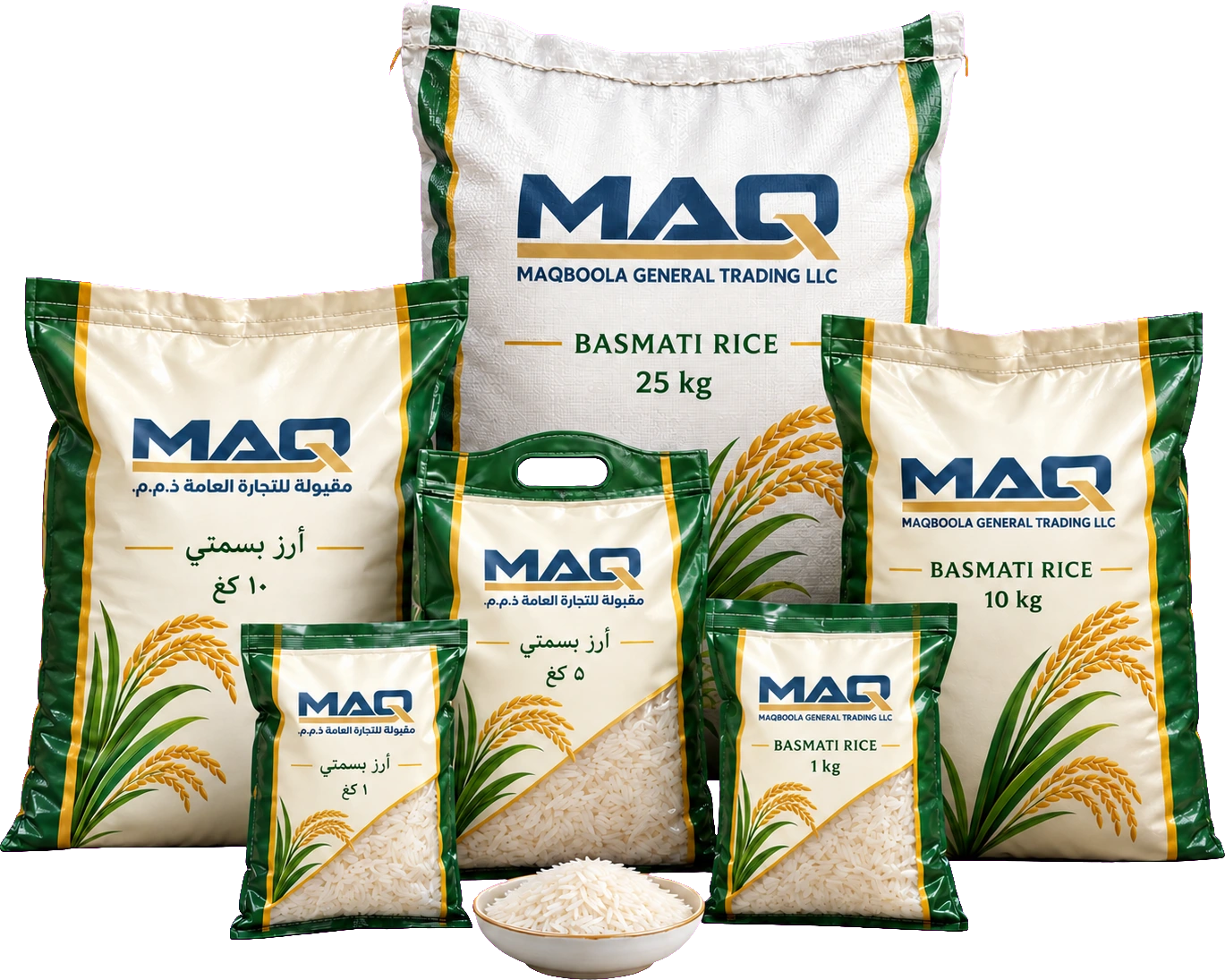
A variety name is the beginning of a specification, not the whole specification. These are useful starting points for a sourcing discussion; availability is confirmed in the quotation.
A recognised extra-long-grain basmati variety. Compare grain integrity, aroma and the cooked sample—not the number alone.
An early-maturing basmati variety. Specify processing and the required cooking result when requesting an offer.
Developed from the 1121 background with bacterial-blight resistance. Confirm the declared variety and sample identity.
A familiar non-basmati name in the Indian market. Discuss your preferred texture and everyday cooking application.
A non-basmati option for commercial enquiries. Add treatment, broken percentage and grain specifications to the name.
Other Indian non-basmati names worth discussing for specific markets. A reference sample helps align local preferences.
ICAR · Basmati varieties · APEDA · Non-basmati rice
1121 describes a variety. White, steam and sella describe different commercial presentations or treatments. Keep both fields in your enquiry.
Rice milled without parboiling. Confirm polishing level and the desired cooked texture. “Raw” here is a trade term, not a ready-to-eat claim.
A common trade description. Ask the mill to define its process and assess an approved sample; do not assume it means instant or fully cooked rice.
Parboiling involves soaking and heat treatment, followed by drying. White and golden sella descriptions should be supported by a colour and cooking sample.
The husk is removed while the bran layer is retained. Specify the variety and storage requirements separately from white rice.
The same Maqboola identity across Arabic and English packs, with the material and closure chosen for each format.
Compact heat-sealed pouches, with a viewing window where suitable. Agree the number of retail units per shipping carton.
Sturdy flexible bags with an appropriate base, seams and optional handle. Bag size should follow filled volume, not artwork dimensions.
Woven polypropylene sacks, laminated or lined as agreed. Confirm gross weight, closure, handling and the actual packed dimensions.
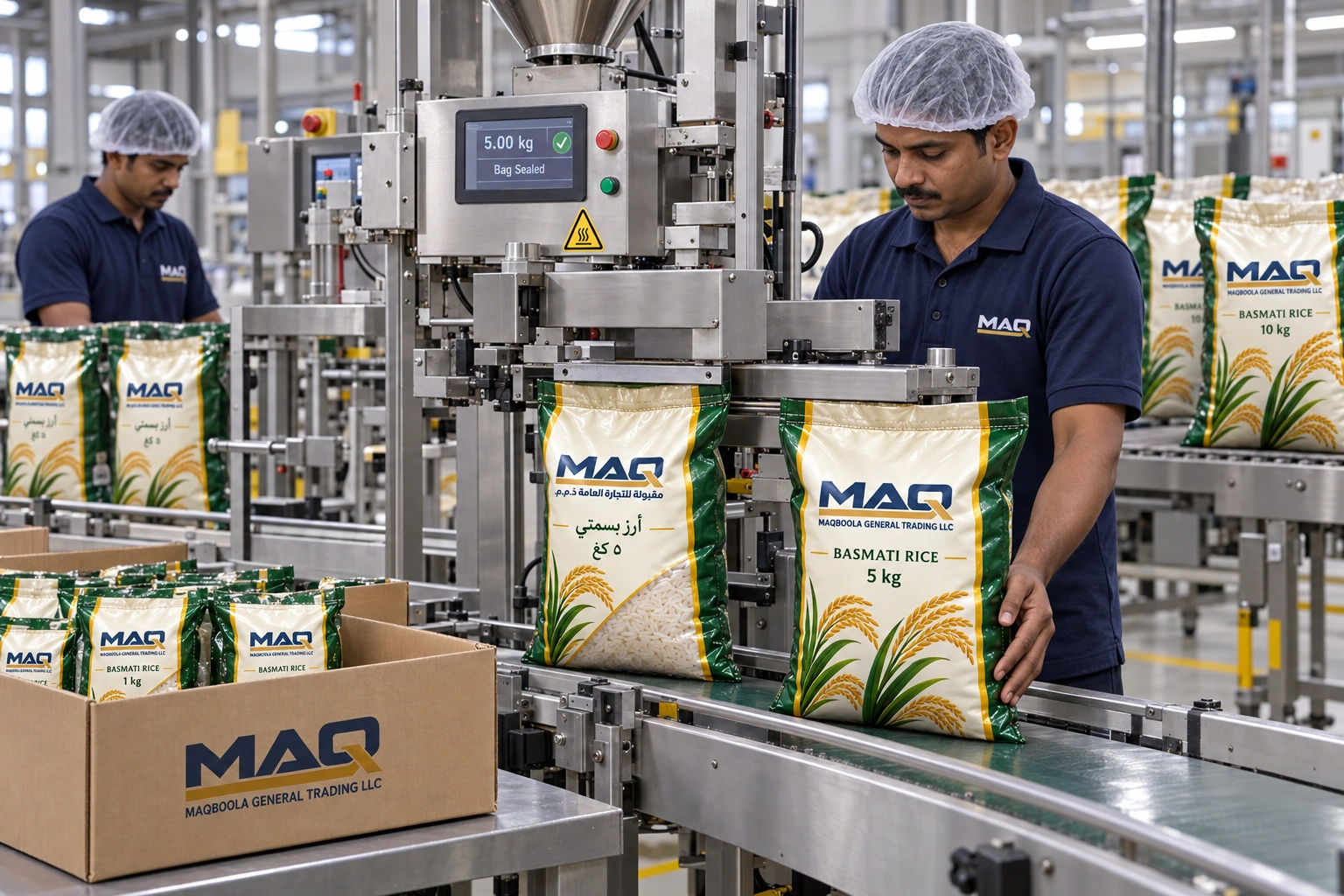
Pack sizes, artwork, minimum quantities and compliance details are confirmed before production.
Each stage changes what the buyer receives. The process and shipment plan are agreed for the selected rice.
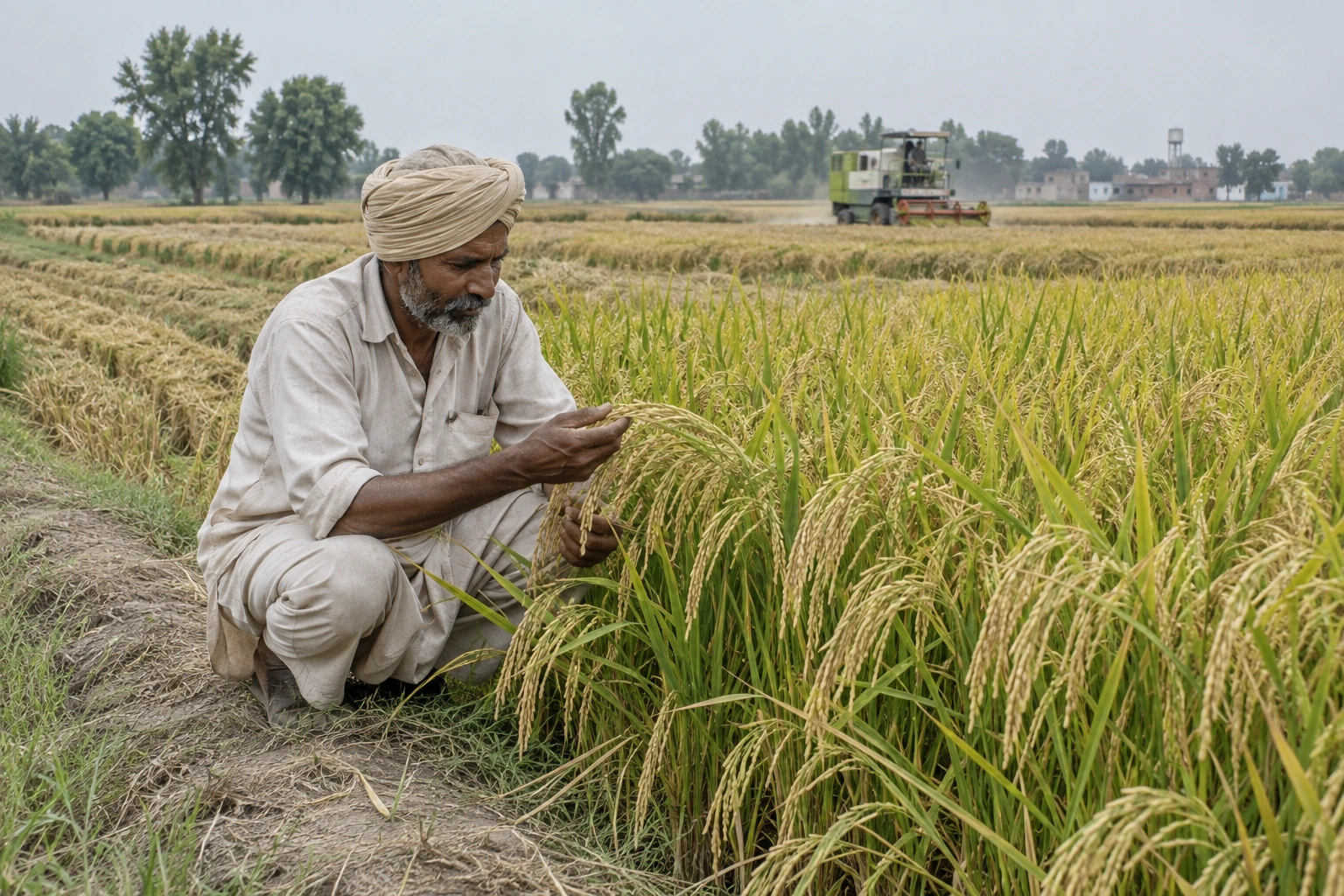
Identify the crop and lot. Dry paddy promptly and control moisture before storage and milling to help protect grain quality.

Remove foreign material and husk; apply the agreed milling route. Sorting and grading separate defects and establish the intended grain and broken fractions.
Check net weight and seal integrity, then apply the approved label and batch reference. Retail packs are grouped into transport-ready outer packaging.
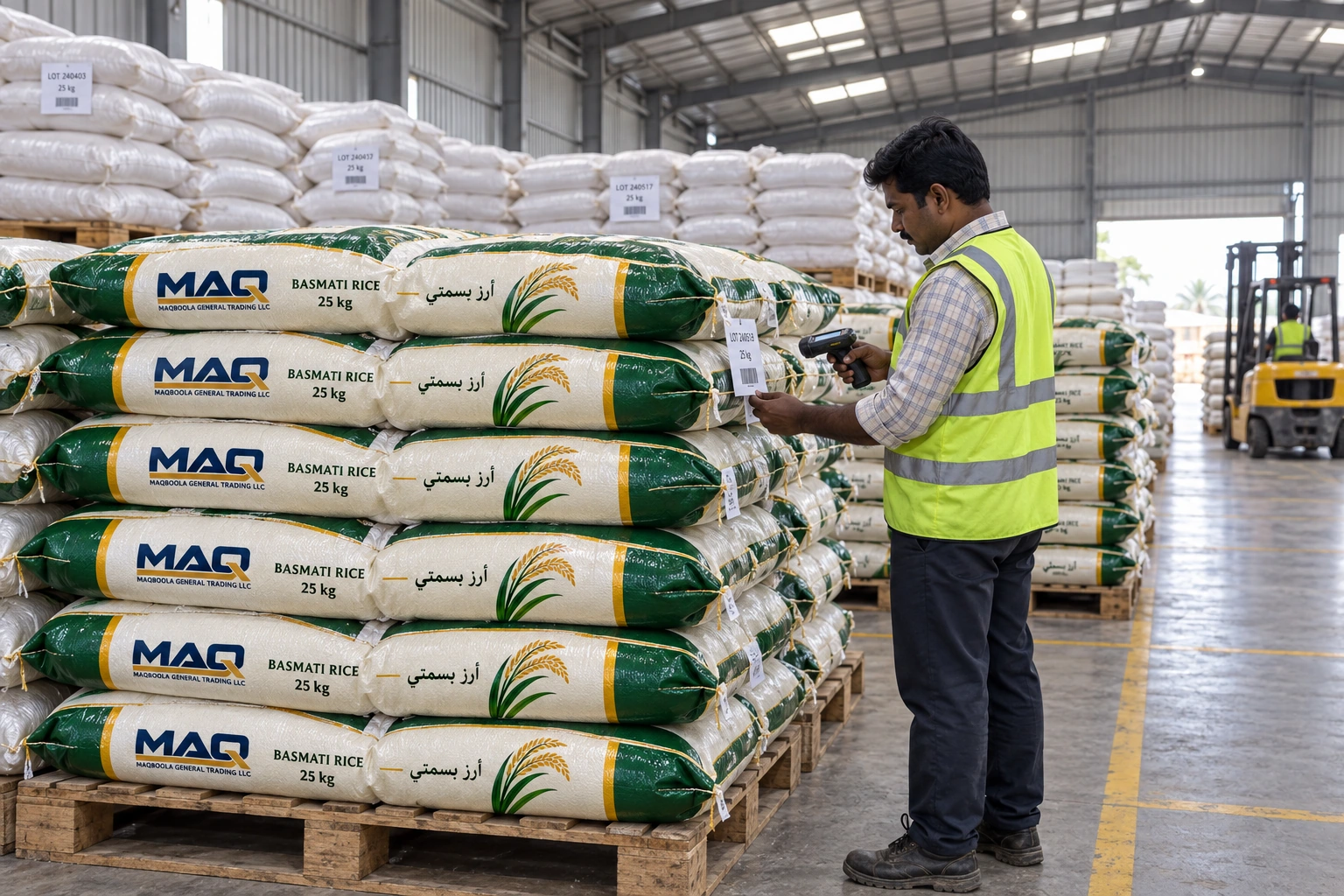
Keep closed sacks dry and protected. Plan stable stacks, clear aisles and lot separation; inspect packaging and pest-control records before dispatch.
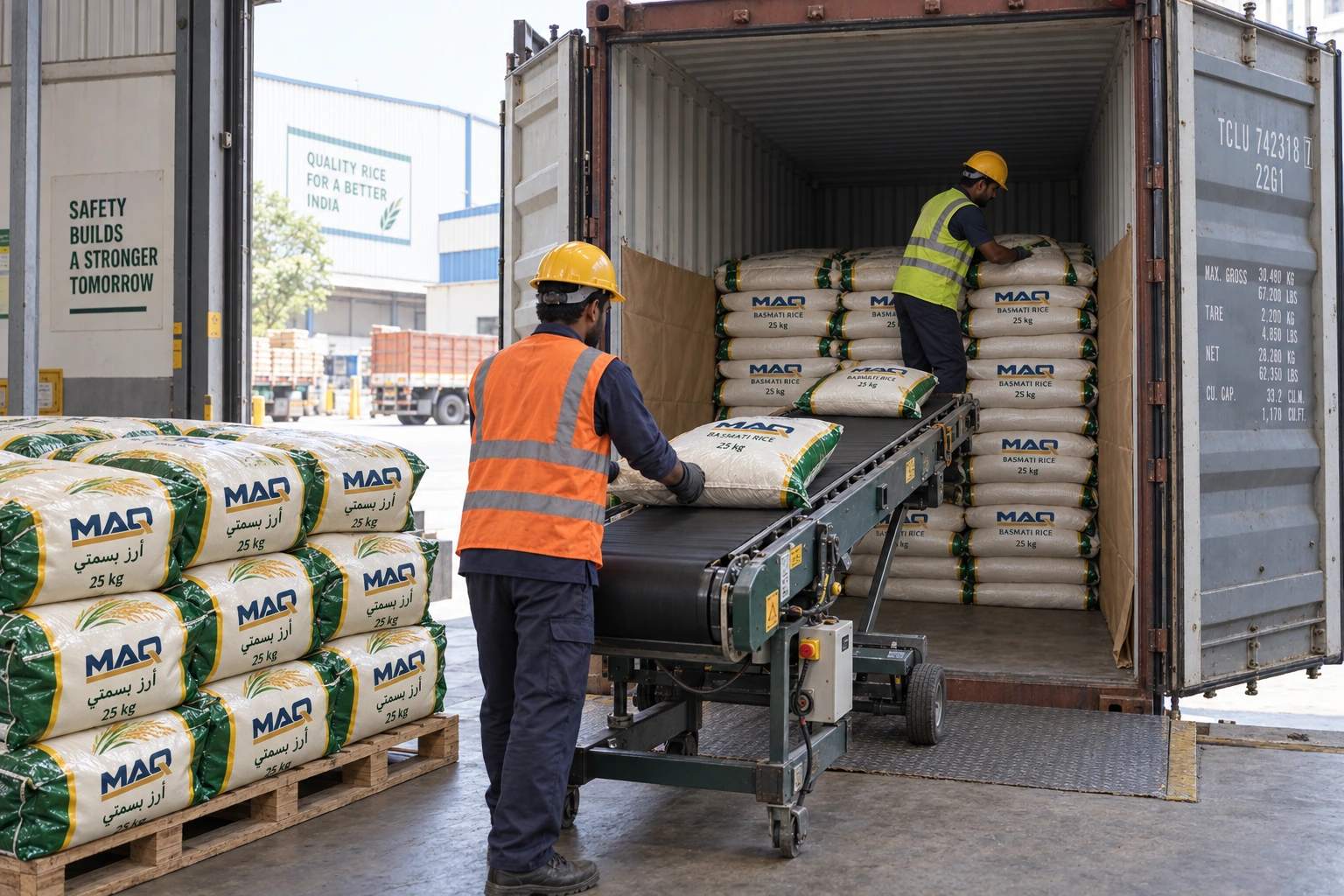
Inspect cleanliness, dryness and odour. Choose floor-loaded sacks or palletised loads as agreed, with suitable protection, weight distribution and a recorded seal.
Routing and delivery terms depend on the order. Palletised rice is not a compressed bale: closed sacks are stacked and secured for handling.
Agree the sample, test method and acceptance limits before confirming the order.
| Item | What to confirm |
|---|---|
| Variety & origin | Declared variety, source, lot traceability and evidence for basmati claims. |
| Processing & ageing | White/raw, steam or sella; crop year and evidence for any ageing claim. |
| Grain dimensions | Average length, shape and distribution assessed by the agreed method. |
| Broken percentage | For example, a requested 5% or 25% limit must state its measurement basis. These are specification options, not promises of stock. |
| Moisture & defects | Moisture limit, chalky or discoloured grains, foreign matter and infestation criteria. |
| Cooking evaluation | Use a repeatable test for aroma, elongation, separation, texture and holding performance. |
| Safety & documents | Applicable residue and contaminant requirements, analysis reports and destination documents. |
| Packaging & shipment | Net/gross weight, inner and outer packs, pallet pattern, container load plan and terms. |
Variety + treatment + broken limit + reference sample. Add intended use: retail, restaurant or wholesale.
Quantity, bag size, Arabic/English artwork and outer packing. State whether the order is one shipment or recurring.
Destination port, required documents, delivery terms and preferred schedule. Container quantity follows the approved load plan.
No. Grain length is one characteristic. Basmati identity requires the correct variety and origin evidence.
Start with a cooking trial that matches your kitchen or customer. Compare the samples under the same conditions before choosing.
There is no single answer for every order. Confirm container payload, bag size, pallet use, load distribution and transport limits with the shipment plan.
YOUR RICE, CLEARLY SPECIFIED
Share the variety, quantity, pack size and destination. We will review the sourcing and commercial details with you.