



Guidance for international trade decisions.
Practical, source-led guidance on shipping, documents, trade finance and payment risk.
Four focused areas.

Shipping, Logistics & Insurance
Practical guidance on freight timing, transport documents, release and container-cost exposure.
Explore category ↗
Contracts, Incoterms & Documents
Understand who creates shipment documents, when they are needed and how the set fits together.
Explore category ↗
Trade Finance & Payments
Clear explanations of documentary credits, collections, payment risk and document examination.
Explore category ↗
Fraud Prevention
Controls for verifying changed payment instructions and responding quickly when fraud is suspected.
Explore category ↗More trade subjects.
Focused entry points connecting related published guides with the next editorial priorities.
Sourcing & Supplier Management
Build clearer RFQs, compare supplier responses and qualify counterparties before commercial commitment.
Explore subject ↗Trade subjectProduct Quality & Food Trade
Translate a food requirement into specifications, evidence, packing and handling controls that can be checked.
Explore subject ↗Trade subjectDubai, Jebel Ali & African Markets
Understand the route, documents and planning decisions behind trade coordinated through Dubai into African markets.
Explore subject ↗Trade subjectTrade Disruptions & Business Continuity
Prepare practical responses to supplier, document, payment and transport disruption before decisions become urgent.
Explore subject ↗Latest guides
Browse the full English trade library, newest first.

Booking a Reefer Container for Food: Setpoint, Ventilation and the Instructions the Carrier Needs
A reefer container keeps cargo at the temperature it was loaded at; it does not rescue warm cargo or a wrong instruction. This guide sets out what the booking, the stuffing and the shipping instructions must specify — setpoint and unit, control mode, fresh-air vents, humidity, pre-trip inspection, airflow-friendly stowage, power on road legs and data recorders — with a checklist and a hypothetical mis-set booking traced from request to bill of lading.

The EU Deforestation Regulation for Coffee, Cocoa, Palm Oil and Soy Suppliers: What Your EU Buyer Will Ask For
The EU Deforestation Regulation makes the EU importer, not the foreign supplier, legally responsible, but the importer cannot comply without plot-level geolocation and legality evidence that only the supply chain holds. This guide sets out the current dates as amended, what data a supplier will be asked for, why mixing untraced material can disqualify a whole lot, and a readiness checklist with a hypothetical mixed-origin coffee lot.

Trading on GAFTA or FOSFA Terms: What the Standard Form Decides Before You Negotiate
A GAFTA or FOSFA form number in a recap imports dozens of printed clauses, other association rules and an arbitration timetable. This guide explains what those forms typically decide, where a conflicting recap creates risk, and gives a checklist of the points the form leaves for the parties.

Cargo Without the Original Bill: What a Letter of Indemnity Commits You To
When cargo arrives before the original bill of lading, carriers usually release it only against a letter of indemnity. This guide explains what the International Group standard wordings require of the person who signs and the bank that countersigns, when an LOI is a poor idea, and how to avoid needing one next time.

Electronic Bills of Lading: What Changes for the Seller, the Buyer and the Bank
An electronic bill of lading can carry the same rights as a paper original, but only if a reliable system gives one person exclusive control and a contract or statute recognises it. This guide explains the platform rulebook and the MLETR-based laws, P&I approval, DCSA standards, eUCP 2.1 credits and the switch to paper, and ends with an acceptance checklist.

Pesticide Residue Limits: Why a Lot That Is Legal at Origin Fails at Destination
A pesticide maximum residue limit is set per substance, per commodity and per market, so the same laboratory result can be compliant in one destination and a violation in another. This guide explains how Codex, EU and US limits are set and looked up, where processing and residue definitions change the comparison, what a usable laboratory report must show, and a pre-shipment check sequence with a worked hypothetical.

Exporting Food to the United States: Facility Registration, Prior Notice and the Importer's FSVP Duties
FDA splits import obligations between the foreign facility (registration with a DUNS number and a US agent), whoever files prior notice before arrival, and the US importer, who must run a Foreign Supplier Verification Program. This guide assigns each duty, shows what happens to cargo when one is missing, and ends with a responsibility matrix and pre-shipment checklist, with rules checked through 11 November 2026.

Customs Value Is Not Always the Invoice Price: Adjustments, Related Parties and Rejected Values
Customs value starts from the price paid but is adjusted by fixed rules on commissions, assists, royalties, freight and financing. This guide explains those adjustments under the WTO Valuation Agreement, how related-party prices and doubted values are tested, how the EU and US differ on freight, and what evidence an importer should hold, with a hypothetical worked example.

Getting Paid Early Under a Usance Letter of Credit: Discounting, Forfaiting and Who Carries the Risk
A seller holding a credit payable months after shipment can sell that future payment, but what is being sold, and who is protected if fraud or a bank failure surfaces before maturity, depends on which bank buys it and on the recourse wording. The article explains the UCP 600 rules on prepayment and reimbursement, forfaiting under URF 800, how the discount price is built, and gives a checklist for comparing offers.

Trade Credit Insurance Claims: The Policy Conditions That Decide Whether a Loss Is Paid
A trade credit insurance policy pays only when its conditions were met before the loss. This guide explains credit limits, maximum extension periods, overdue notifications, waiting periods, disputes, recoveries and declarations using published policy wordings, and works through a hypothetical claim in which one missed step changes the payout.

Dispute Resolution Clauses: Seat, Governing Law and Why the Choice Decides the Outcome
The dispute clause in a cross-border sale contract holds four separate choices: governing law, courts or arbitration, the seat, and the rules or institution. Explains each, how awards are recognised under the 1958 New York Convention, what goes wrong when a clause is blank or contradictory, and works backwards from where the counterparty's assets are. General information only; questions to take to a lawyer before signing.

Sanctions and Counterparty Screening for Food Traders: Scope, Limits and Who Decides
Sanctions screening is a process a food trader runs and records, not a legal conclusion. Explains what name screening checks, what a clean result cannot show (ownership and control, vessels, banks, goods and end use, timing), how partial matches are handled and recorded, where the escalation line sits, and why the trader's own compliance adviser and bank decide. Declines to summarise any sanctions regime; every practical point is framed as a question for the reader's adviser or bank.

Import Conformity Regimes Are Not Uniform Across Africa: Kenya, Nigeria and Ghana Compared
Kenya, Nigeria and Ghana each decide import conformity through different authorities and documents. Kenya applies KEBS pre-export verification (PVoC) to goods shipped from covered exporting countries unless exempt; Nigeria runs SONCAP for SON-regulated goods but excludes food, which needs NAFDAC registration; Ghana splits imported food between Ghana FDA registration and permits and Ghana Standards Authority inspection of high-risk goods. Each rule is dated and sourced to the authority, with a per-destination checklist.

Reading a Quotation That Cannot Be Real
How a buyer builds a rough cost floor for a food commodity from an origin price reference, processing, packing, inland costs, freight, insurance and the seller's minimum margin, and uses it to judge whether a quotation is plausible. Lists the legitimate reasons a price can sit low, the evidence each one leaves, the patterns that leave no evidence, and when to walk away from a price that is real but wrong for the buyer's market.

Jebel Ali Free Zone or Mainland Dubai: What the Difference Means for Your Order
A buyer-side explanation of why a Dubai supplier in a free zone and one on the mainland quote and document the same goods differently: the customs status of goods held in a zone, the declarations used when they leave for export or enter the UAE market, how duty, deposits and refunds work under the GCC Common Customs Law as applied by Dubai Customs, and what to confirm with the supplier before assuming a duty position.

When the Route Changes: What a Longer Voyage Does to Your Contract and Your Cost
When a carrier diverts cargo onto a longer route, for example around the Cape of Good Hope instead of through the Red Sea and Suez Canal, freight and surcharges, transit time, letter of credit dates, residual shelf life and insurance all move at once. Maps each effect to the carrier term or sale-contract clause that allocates it, with dated carrier notices as illustrations, a labelled hypothetical shipment and a four-clause audit for the next contract.

Amending an LC Without Losing the Shipment Window
What to do when a letter of credit no longer matches the shipment after it has been issued: who has to agree to an amendment, why the shipment, presentation and expiry dates must move together, how to build the timetable backwards from the vessel, how to limit work done at risk while the amendment is pending, and when a part-lot shipment or a new credit is the better route. UCP 600 points are limited to article text reopened on the ICC Library page on 1 November 2026.

When Your Buyer's Country Cannot Release Foreign Currency
When a solvent buyer has paid in local currency but the money cannot leave the country, the problem is transfer and convertibility risk, not credit risk. Explains how a foreign-currency allocation queue works as a mechanism, what each payment term does when a queue forms, what export credit and political risk insurance cover and where they stop, the restructuring options and their limits, exposure caps, and when to pause shipments. Names no country.

Open Account Terms for a New African Buyer: What Has to Be True First
Before a seller grants open account payment terms to a new buyer, several things have to be true: payment behaviour without a bank, financial visibility, screening, currency transfer, an enforceable claim, a survivable exposure and a limit someone reviews. Explains what trade credit insurance does and does not do, and builds a staged offer (part advance, shorter term, exposure cap) instead of a yes or no.

Residual Shelf Life: The Number Your Buyer's Market Actually Requires
Buyers, retailers and some regulators set a minimum remaining shelf life at a named checkpoint. Explains the three numbers involved, how requirements are expressed (with dated, market-scoped examples from India, Saudi Arabia and Japan), a backward calculation from the delivery date to the oldest production date that can still ship, the sea and clearance time most schedules underestimate, how to write the requirement into a contract, and how to offer short-dated stock honestly.

Why Dubai Became a Consolidation Point for Africa-Bound Food Cargo
What a Dubai consolidation and re-export point adds between producers and an African food buyer: mixed containers from several origins, free-zone and bonded storage, separate sea and air connections, and stock held near the market. Also where buying direct from origin is better, and the questions to ask any consolidator about what it actually holds and controls.

Private Label or Supplier Brand: Control, Cost and the Risk Each Carries
Putting your own name on a food pack moves responsibility to you before it moves margin. Sets out, per named market (EU, UK, US, UAE) and with dated sources, who is responsible for food information and who must withdraw or recall, then compares own label and supplier brand on first-order economics, supplier dependency, shelf-life stock risk and a staged route, with a recomputed hypothetical biscuit example.

Force Majeure and Price Escalation in Commodity Sale Contracts
Force majeure is a contractual allocation, not a general escape. Explains the parts that make a clause usable (defined events, the test, notice, consequences, duration and termination), why a cost increase usually sits outside it, and how escalation and hardship clauses deal with cost shocks, using the ICC 2020 model clauses, the UNIDROIT Principles and CISG Article 79 as named reference texts.

When a Single Origin Becomes a Business Risk
Single sourcing is efficient until the one origin or supplier stops. Gives a concentration review any small trader can run, maps failure modes (crop, policy, corridor, single supplier) to the kind of second source that helps, prices a second source as qualification cost, premium and quality variance, and compares qualified-but-dormant with split volume in a recomputed hypothetical example, including products where no substitute exists.

Halal Certification for Food Exports: Scheme Recognition and Destination Acceptance
A halal certificate is accepted at destination only if the importing authority recognises the body that issued it. Explains the recognition chain (certifier, accreditor, destination authority) with dated examples from the UAE, Saudi Arabia, Malaysia and Indonesia, the scope and validity checks on the certificate, where ingredients and segregation fail, and how to check recognition before choosing a certifier. Procedural and commercial only; religious interpretation is out of scope.

Broker Chains and Mandate Letters: What an Intermediary Can Actually Deliver
Intermediaries are normal in commodity trade; unverifiable chains are the problem. Separates a real agent (named principal, contactable contract owner, defined commission) from a daisy chain, explains what a mandate letter, LOI, ICPO, soft corporate offer, NCNDA and IMFPA commit anyone to, and gives one access test that resolves most chains before any money or bank detail moves.

Transhipment Through Jebel Ali: What Changes in Your Documents
Transhipment changes documents more than it changes goods. Explains what transhipment is in customs and shipping terms, one through bill versus separate bills at a hub, how a transhipped routing meets an LC transhipment clause, why origin and port of loading are different fields, what re-consolidation and free-zone handling do to the paperwork and the insurance, and the wait at the hub as a planning line.

Supplier Assessment Without Travel: What a Remote Audit Can and Cannot Verify
A remote supplier assessment is a real control with real gaps. Sets out four tiers (documents checked with issuers, a live unscripted video walkthrough, an appointed local agent, an independent audit against a named standard), names what each tier verifies and misses, shows how scheme and regulator rules on remote auditing differ, and matches the tier to order value and product risk with a written residual-risk record.

Forged Bills of Lading and the Goods That Were Never Loaded
A bill of lading is evidence issued by a carrier, so verifying one means going to the carrier and the ship, not studying the PDF. Covers three patterns (a document for cargo that does not exist, a genuine document over different cargo, one shipment financed twice), the checks available through the carrier's own channels, container and vessel identifiers and their limits, where inspection fits, and why a scan is not an original.

Certificates of Origin: What They Prove, Who Issues Them, and Where Preference Applies
A certificate of origin answers a where-from question; a preferential proof of origin claims a lower duty under a named agreement. Separates the two, explains who issues each, the wholly obtained and substantial transformation tests, why a genuine origin can still fail a preference claim, and the evidence to keep after clearance, with dated EU, UK, UAE and AfCFTA examples.

Temperature and Moisture Damage Claims: Evidence to Collect Before the Container Is Unstuffed
A cargo damage claim is usually decided by evidence gathered before and during unstuffing. The sequence for a consignee facing a wet, mouldy or warm container: stop, notify, photograph the seal and closed doors, arrange a survey, unstuff under control, sample, record conditions and build the file, with notice periods stated as variable.

Food Labelling for Export: The Fields That Change Per Destination Market
Most of a food label is stable across markets; a defined set of fields is not. Separates the stable core (identity, ingredients, allergens, net quantity, lot) from the per-market variables (language, date expression, nutrition format, allergen lists, responsible party, claims), with dated examples from Codex, the EU, the US and Dubai, and an artwork workflow with an approval gate before print.

Sourcing Sunflower Oil: Grades, Origins and the Specification Points That Move Price
What separates one sunflower oil offer from another: refining stage, linoleic, mid-oleic or high-oleic grade, acid and peroxide values with their test methods, pack format, shelf life on a long sea leg, origin and the certificates that travel with the cargo.

From Sample to Contract Reference: Making Sample Approval Mean Something
An approved sample protects a buyer only when it is identified, jointly sealed, retained by both sides and referenced in the contract, with a stated tolerance and a named route for resolving a disagreement. Covers pre-production, pre-shipment and arrival samples, counter-samples and umpire analysis.

Aflatoxin and Contaminant Limits in Sesame, Spices and Dried Fruit
Aflatoxin and other contaminant limits are set by the destination, not by Codex or the origin laboratory. Because contamination in sesame, spices and dried fruit is patchy, the sampling plan decides the result more often than the laboratory does. Explains which limits apply, how official sampling works, how to design a testing programme and what to do with a detained lot.

HACCP, ISO 22000 and BRCGS: What Each Certificate Tells a Buyer
HACCP is a method, ISO 22000 a management system standard, and BRCGS and FSSC 22000 certification schemes with their own audit rules. Explains what certification to each does and does not evidence, why accreditation decides whether a certificate carries weight, how to read the scope, and how to match the requirement to product risk and destination channel.

"SBLC Leasing" and Instrument Monetisation: Why These Offers Do Not Finance Trade
Why a leased or monetised standby letter of credit cannot finance a trade: what an MT 760 actually is, whose credit stands behind a real standby, the fee sequence these offers follow, the vocabulary that recurs, the facilities a trader was probably looking for, and the first actions if money has already been paid.

Demand Guarantees Under URDG 758: What a Buyer or Seller Is Really Signing
How a demand guarantee under URDG 758 works as an independent undertaking: what a complying demand contains, how advance payment, performance and retention guarantees differ, why reduction and expiry wording matter, what extend-or-pay does, and where recourse sits in a counter-guarantee chain.

Confirming Banks: Who Pays When the Issuing Bank's Country Cannot Transfer Funds
A confirmed letter of credit adds a second bank's undertaking. This explainer separates buyer, issuing-bank and country transfer risk, shows which layer confirmation reaches, how silent confirmation differs, what drives the price, and how to build the cost into a quotation.

What a Documentary Letter of Credit Actually Pays For
How a letter of credit works, step by step, and what it actually pays for: a bank undertaking tied to complying documents, not to the condition of the goods. Covers the process, the rules, what the credit protects and leaves exposed, inspection evidence, cost and cash, and a worked sugar example.

Incoterms® 2020 Rules for Food Trade: Choosing Between FOB, CFR, CIF and DAP
FOB, CFR, CIF and DAP compared for food cargo: where ordinary transit risk passes, who books and pays the main carriage, who must insure and at what default level, when containers call for FCA, CPT or CIP, and how the choice can change the customs value.

Writing a Commercial Specification a Supplier Can Actually Quote Against
Give suppliers one basis to quote against: a specification covering product identity, measurable requirements and evidence, packing, shelf life, origin, quantity, delivery and documents, with a copyable enquiry template and a method for comparing the replies.

Verifying That a Trading Company Exists: A Documentary Due-Diligence Sequence
A due-diligence sequence ordered by cost and speed for checking a trading counterparty before a first payment: registry, the person and their authority, ownership, premises and approvals, the payee, references, paid verification and visits, with what each check establishes and what it leaves unknown.

Scanned Certificates: What Document Red Flags Can and Cannot Tell You
Visual red flags on an emailed certificate catch careless forgeries and give false comfort against competent ones. This guide identifies who issues each certificate in a food shipment, how to confirm it with the register, issuer or accreditation body, and what to record in the supplier file instead of the PDF.

Independent Inspection Certificates: What Third-Party Quality and Quantity Reports Cover
An inspection certificate records what was inspected, where, when and by what method, and nothing more. Explains common scopes, the limits of sampling, why load-port and discharge-port results differ, how to name the method, laboratory and tolerance, and how to make the certificate a payment condition.

Marine Cargo Insurance for Food Shipments: Comparing the Standard Cover Levels
Compares Institute Cargo Clauses (A), (B) and (C) in plain language for food cargo: who insures under each Incoterm, insured value and what a letter of credit may require, the exclusions that bite on food, extensions worth discussing, how long cover lasts, and the first 48 hours after a suspected loss.

How Packing Decisions Change the Landed Price
Pack format decides how much product one container carries, how it is handled at destination and which channel can sell it. Compares floor-loaded and palletised loads, weighing out and cubing out, and tests three biscuit formats and two sugar formats on paper before ordering.

FCL, LCL or Breakbulk for Food Cargo: Choosing by Volume, Value and Risk
Volume, value, urgency and how sensitive the cargo is decide the mode for food. This guide covers when a part-filled container beats consolidation, why LCL is a food-safety question, when breakbulk becomes the practical choice and what each mode does to your documents.

Container Stuffing and Cargo Securing for Bagged and Cartoned Food
Much avoidable transit damage to bagged and cartoned food begins at stuffing. How to inspect the container, distribute weight, use dunnage and void fill, control condensation, seal the unit and require a stuffing evidence pack as a routine document.
Packing List, Weight Note and the Arithmetic Customs Will Check
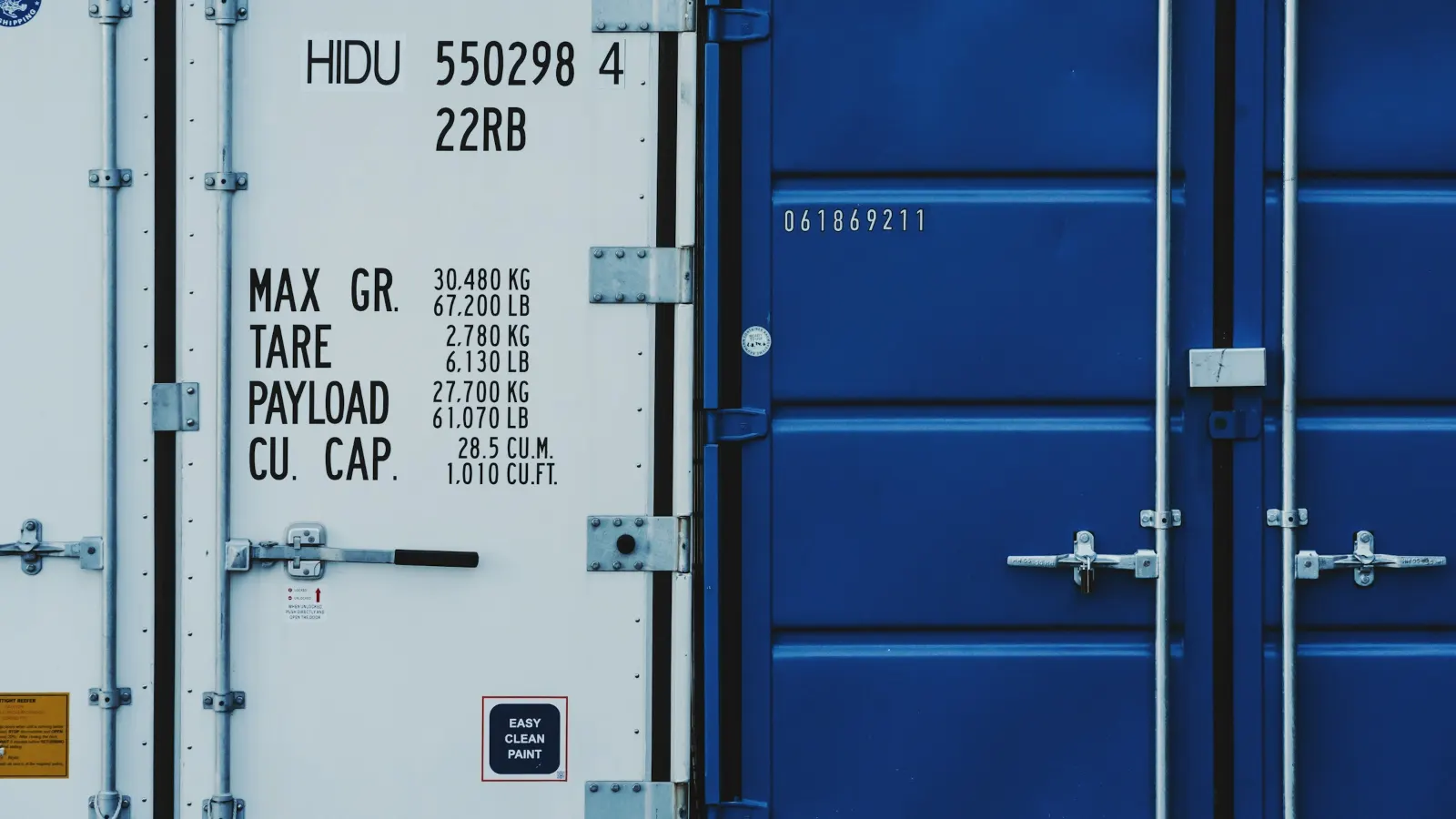
Net weight, gross weight, tare, package count, volume and value must reconcile across the invoice, packing list, bill of lading, certificate of origin, customs declaration and VGM. What each figure means, what must equal what, the legitimate reasons small differences occur, and a reconciliation routine to run before presentation.
Payment Redirection Fraud: How a Genuine Invoice Becomes a Stolen Payment
How a genuine supplier invoice becomes a stolen payment, the independent verification and approval controls that address it, and the first steps if money has already gone.

Advance Payment: How Much Is Reasonable, and How a Buyer Reduces the Exposure
A risk-based way to negotiate advance payment on a first order: milestone payments, inspection-linked release, advance payment guarantees and wording you can adapt.

Why Banks Refuse Documents, and How to Fix a Presentation
Written for the moment after a refusal: read the notice, test each discrepancy, separate curable from incurable, and choose between re-presenting, a waiver, collection basis or renegotiation.
Reading an LC Before You Accept It: Twelve Fields That Decide Whether You Get Paid
A sequenced procedure for reviewing a letter of credit on receipt, ordered by what stops a shipment first, with a hypothetical amendment request.

Standby Letters of Credit for Commodity Buyers: A Backstop in Most Contracts
Why standbys are usually backstops rather than the route of payment, how ISP98, UCP 600 and URDG 758 differ, and the drafting that decides whether a draw is proper.

Documentary Collection or Letter of Credit: Choosing by Risk, Cost and Relationship Age
A decision guide for repeat trade: what changes when a bank stops promising and only handles documents, how D/P and D/A differ, and the evidence that justifies stepping down from a credit.

Reading a Bill of Lading: The Parties, the Consignee Box and the Release Mechanism
A walkthrough of the boxes that decide who can collect ocean cargo, how straight bills, order bills and sea waybills differ, and how to match release to the payment method.
The Document Set Behind One Shipment, in Order of Who Produces It
A reference to the documents behind one shipment, organised by issuer and stage, with a dependency map and a hypothetical route that shows how sequencing alone can cost days.

Chilled Lamb by Air: Cold Chain, Timing and When Air Beats Sea
Chilled lamb trades against elapsed time. This guide explains product form, handovers, country-pair certification and destination clearance, and when frozen is the better choice.
Demurrage and Detention: How the Charges Build and Who Ends Up Paying
Two container charges that readers often merge, the clocks behind them, a worked two-clock example and the decisions that are made before the vessel arrives.