Botanical identity
Hibiscus sabdariffa, also called roselle. Specify the plant part and variety when comparing samples.




MAQBOOLA · HIBISCUS / KARKADEH
From Sudanese calyces to retail packs and beverage ideas. Explore the ingredient, understand the handling, and build a specification around your market.
Discuss your hibiscus order ↗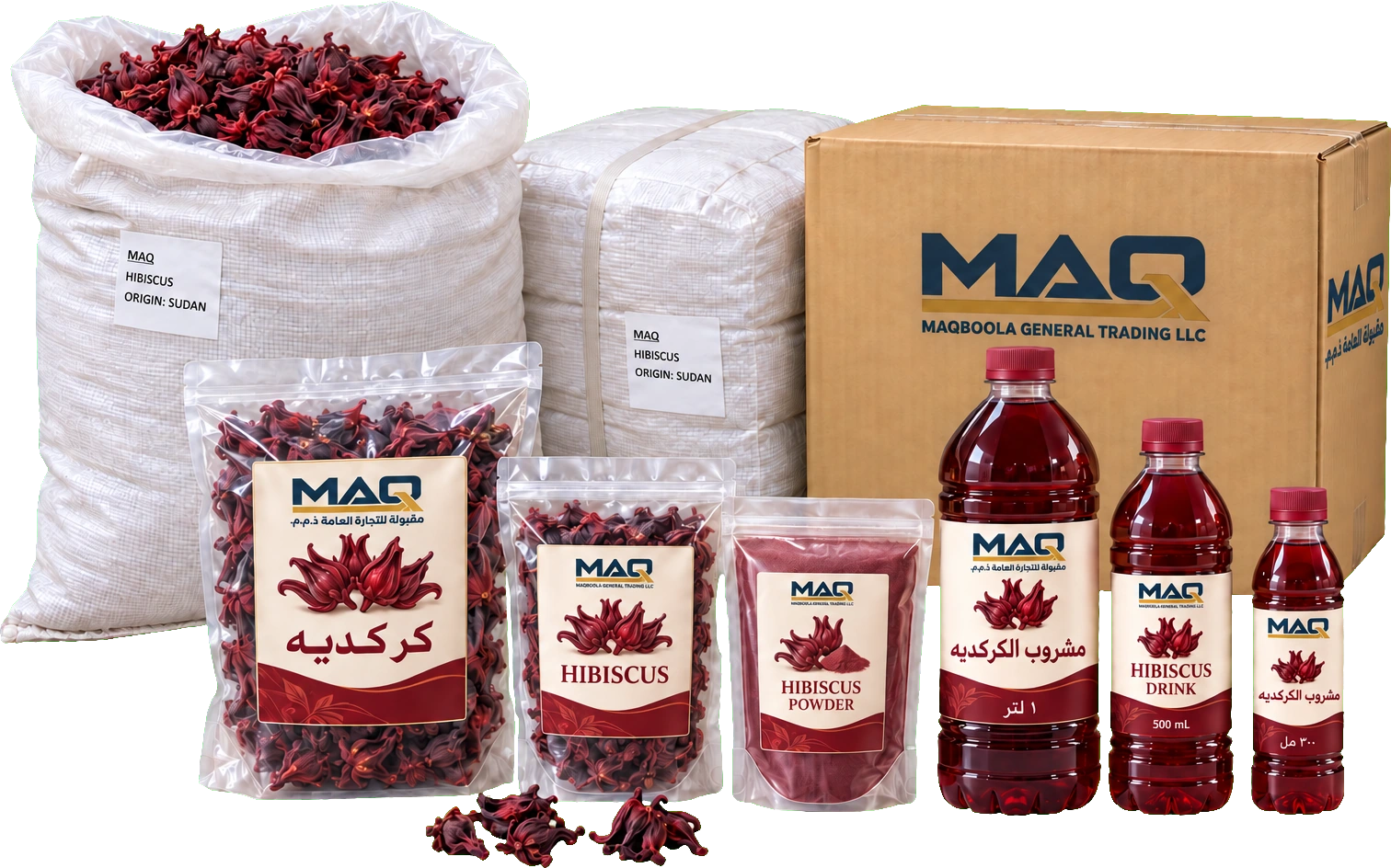
The fleshy calyces surrounding the seed capsule are harvested and dried. This is the familiar tart, red ingredient used for karkadeh.
Hibiscus sabdariffa, also called roselle. Specify the plant part and variety when comparing samples.
Anthocyanin pigments contribute to the red colour; organic acids contribute tartness. Colour intensity varies with raw material and preparation.
A tea blend, an extraction line and a retail pouch need different particle sizes and handling. Choose the specification before the pack design.
FAO · Hibiscus post-harvest handbook (2004) · Food Chemistry · 2014
Build a range around the way your customers buy and use hibiscus.
For visible botanical blends, loose infusion and retail pouches. Agree the proportion of intact calyces and broken material.
For tea bags and controlled blending. Specify the cut size, sieve range and permitted fine fraction.
Ground calyces for formulation trials. Ground powder is not automatically soluble: instant extracts are a different specification.
Discuss 300 mL, 500 mL and 1 L bottles. Recipe, sweetening, processing, shelf life and label compliance require agreement before supply.
Dried hibiscus is light and bulky. A pack must suit the material—not just a number on the label.
Ordinary woven outer sacks with a suitable food-contact liner where required. Specify closure, liner and stacking conditions with the supplier.
Useful when shipment volume matters. Agree compression and protection without accepting excessive breakage. Confirm the actual packed dimensions.
Treat these as requirements to assess, not universal sack sizes. Feasibility depends on density, compression and safe handling; smaller packs may be more practical.
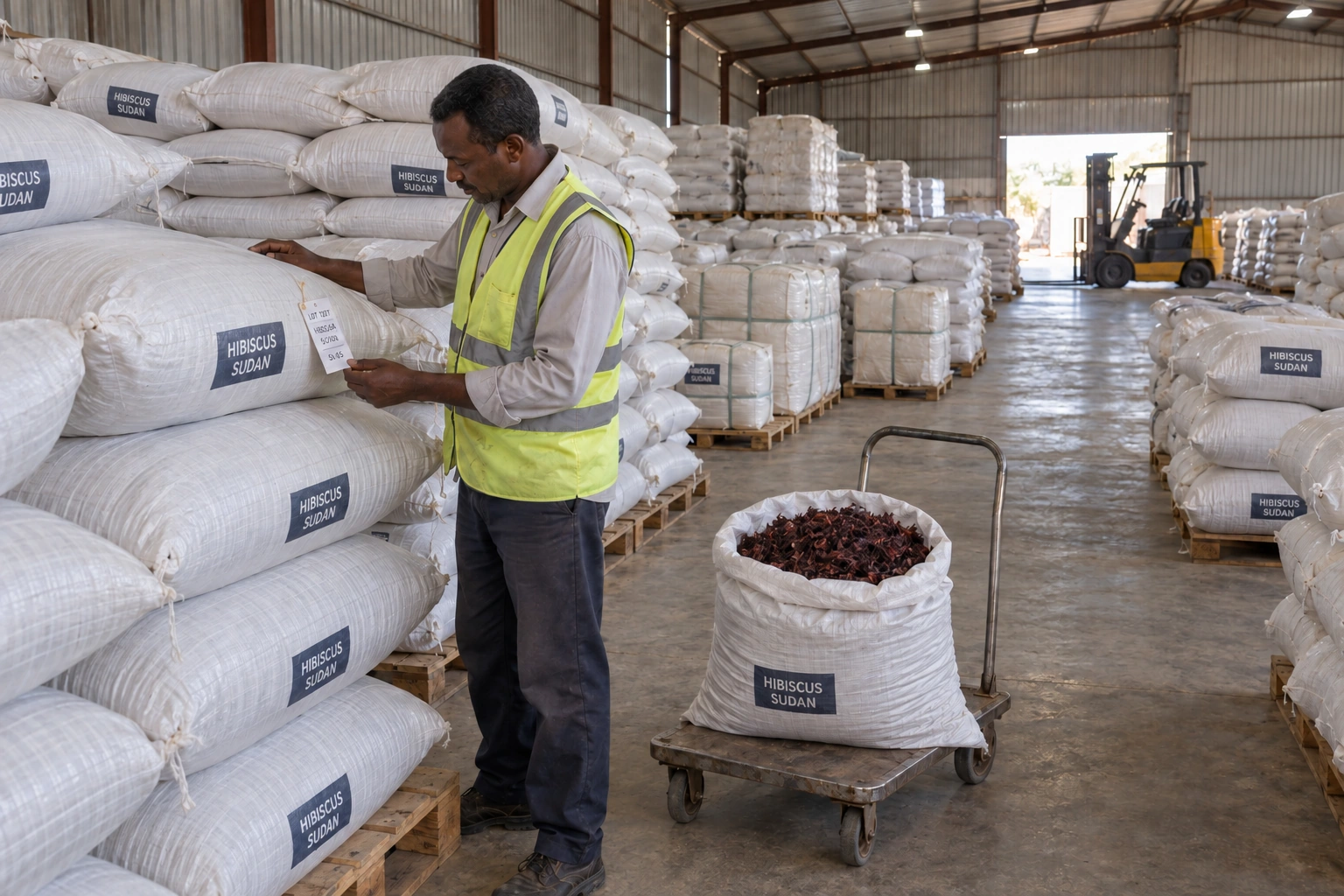
Keep packs dry, protected from light, off the floor and separated from strong odours.
A sourcing route to plan around your order. Ports, services and delivery terms are confirmed for each shipment.
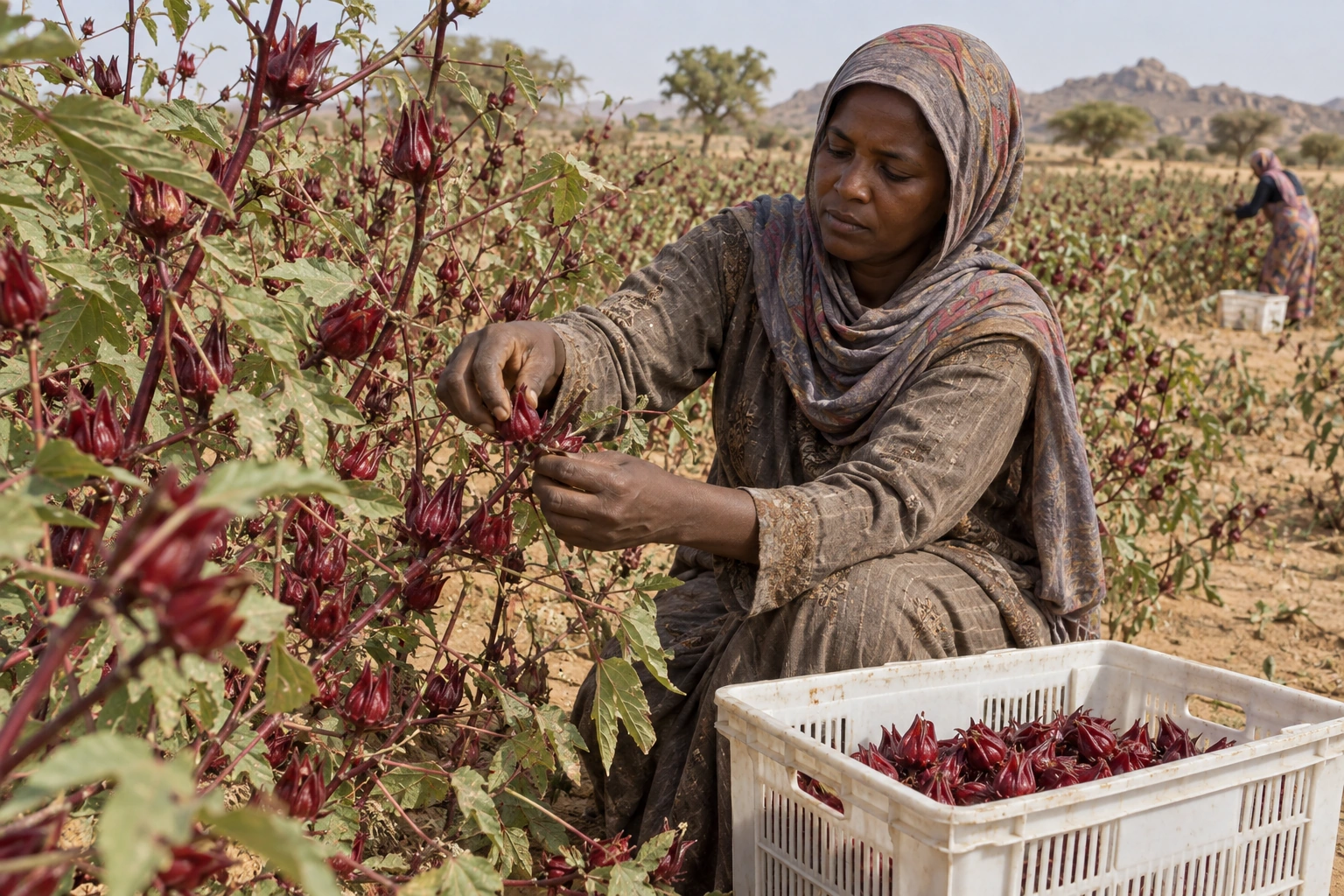
Select mature calyces, separate seed capsules and prevent contact with soil. Keep lots identifiable from the start.
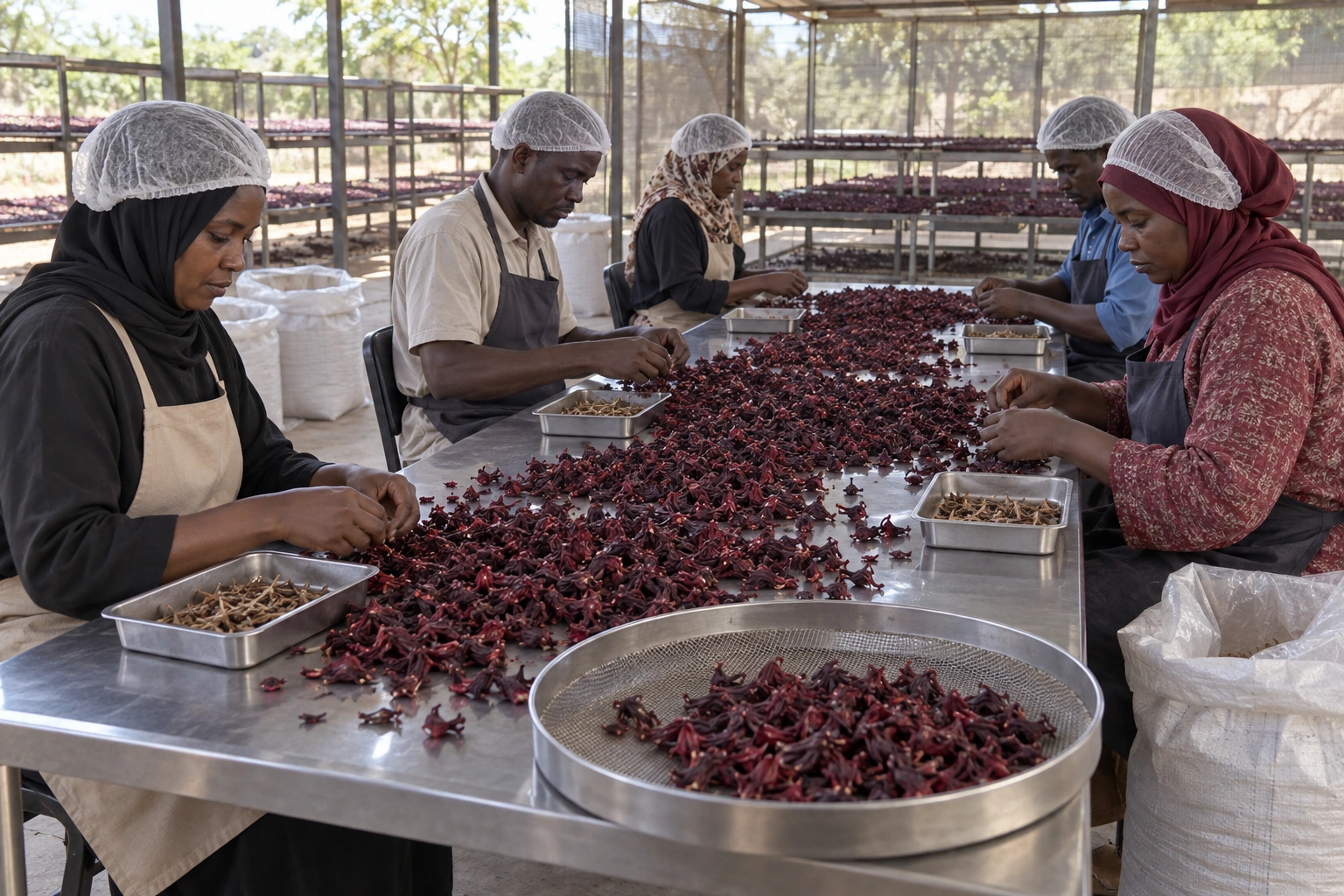
Dry under controlled, hygienic conditions. Remove stems and foreign material, then check the agreed moisture and cut quality before packing.
Weigh, close and label the packs. Record lot references, inspect pallets and retain an agreed reference sample.

Check that the container is dry, clean and free from odour. Agree stowage, moisture protection, seal records and shipping documentation.
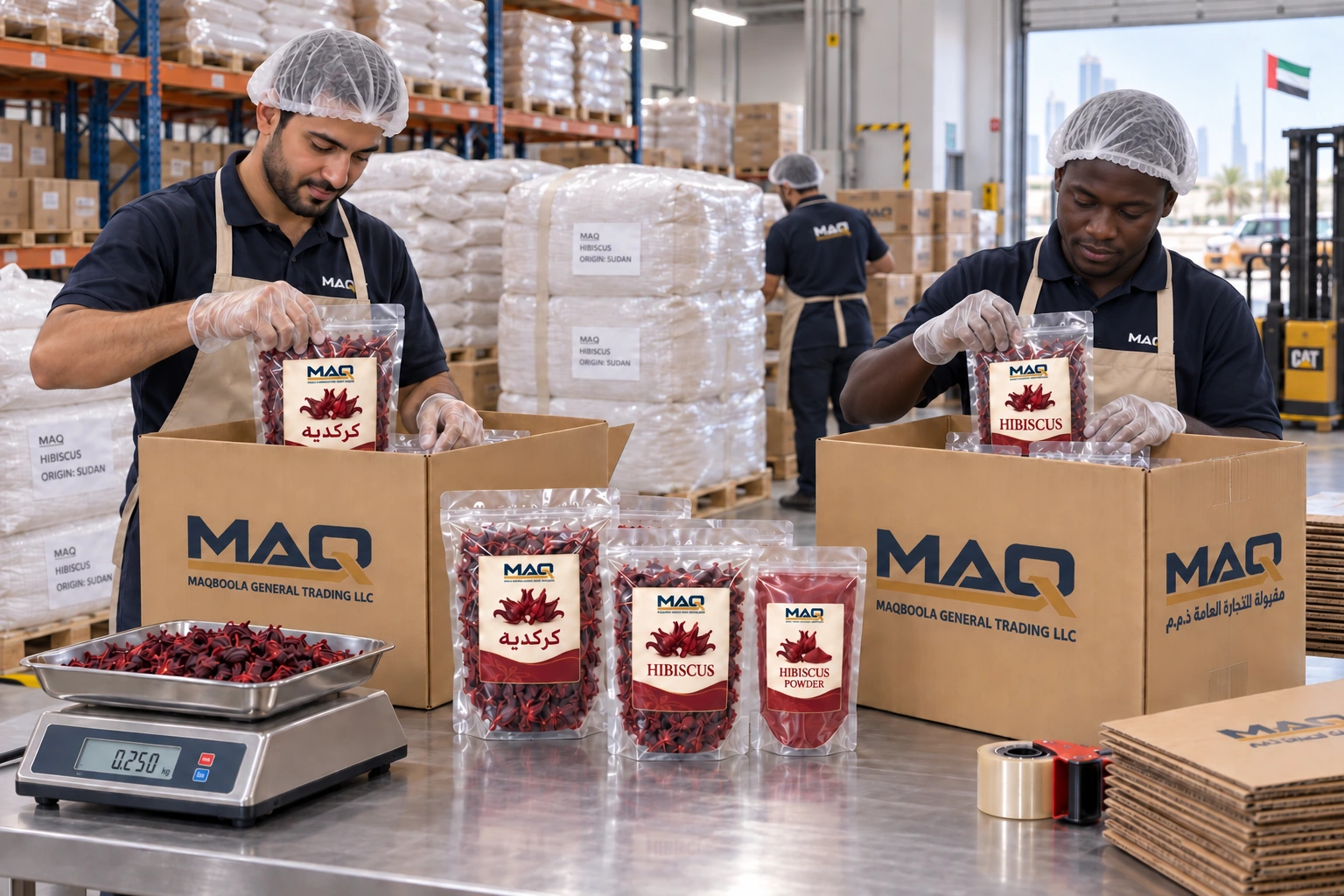
Reconcile seals, quantities and lots at receiving. Where repacking is agreed, preserve traceability and use approved food-contact packs and artwork.
Use this checklist when comparing samples and quotations. Acceptance limits and test methods must be agreed for the intended use and destination.
| What to check | What to agree |
|---|---|
| Identity & origin | Species, plant part, declared origin and lot reference. |
| Appearance & aroma | Colour, characteristic aroma and freedom from musty odour. |
| Grade & particle size | Whole or cut material, sieve range, broken fraction and fines. |
| Moisture | Agreed limit, sampling procedure and measurement method. |
| Foreign matter | Stems, seeds, stones and other unwanted material. |
| Food safety | Microbiological criteria and relevant contaminant/residue checks. |
| Packaging & traceability | Net weight, liner, closure, batch labelling and storage instructions. |
| Documents | Agreed analysis report, origin and destination-required documents. |
Serving traditions offer ideas for your range—not a single recipe for every market.
Served hot or chilled, with sweetness adjusted to taste.
A familiar hibiscus drink, often served chilled.
Agua de jamaica brings hibiscus into the refreshing aguas frescas tradition.
Hibiscus drinks may be paired with ginger and spices. Recipes vary by place and household.
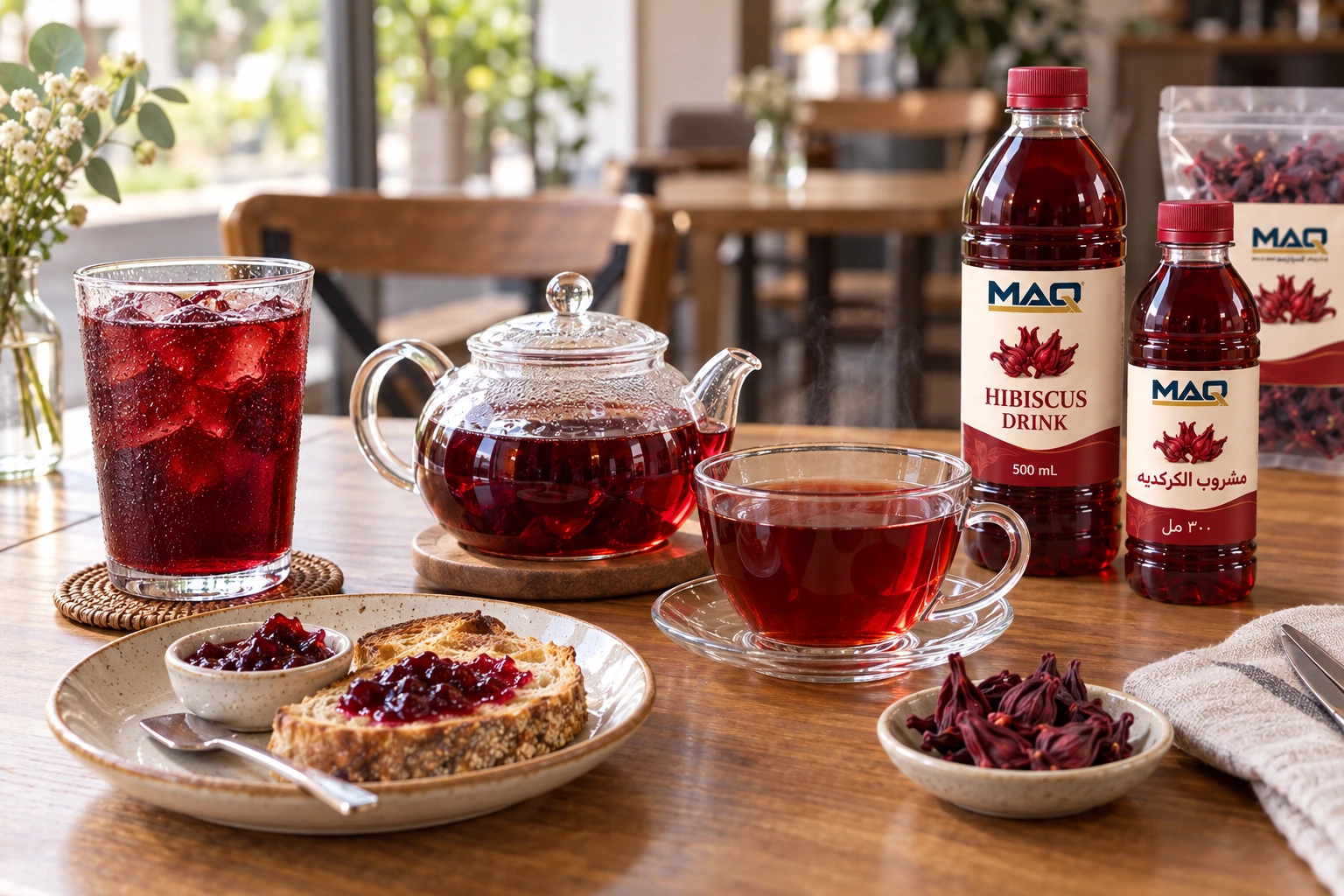
Explore syrups, preserves, jellies, sauces and frozen desserts. Test flavour, acidity and colour in the actual recipe: heat and formulation can change the result.
Other parts of the roselle plant have separate uses: leaves as vegetables in some cuisines, and stems as a fibre source. These are distinct from the dried calyces offered for beverages.
World Agroforestry · Hibiscus sabdariffaResearch on hibiscus preparations is interesting, but it is not a clinical claim for a particular bag, powder or bottle.
This meta-analysis reported reductions in blood pressure and called for further well-designed trials.
Read the published review ↗The review examined blood-pressure outcomes across different comparisons and highlighted the need for longer studies.
Read the published review ↗A wider review found promising blood-pressure results, with substantial variation between studies. Optimal preparation, dose and duration remain uncertain.
Read the published review ↗No. Milled calyces can remain suspended or settle. A soluble extract has a different process and specification; ask which material is being quoted.
Yes—include your target weight or volume, Arabic or English artwork, annual demand and destination. Feasibility, minimum quantities and label approval form part of the quotation.
Use the validated shelf life for the actual product, process and packaging. A dry calyx and a bottled drink must not share an assumed expiry period.
Product form, intended use, quantity, packing, destination and required tests. If you have a reference sample or specification, mention it so the offer can be compared fairly.
FROM REQUIREMENT TO QUOTATION
Tell us the form, quantity and destination. We will review the specification and commercial options with you.